
Helpline: 99713-10122
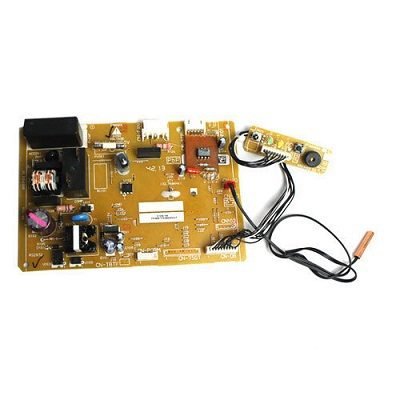
AC PCB
Spare Details
-
-
Spare Type:
Fixed-Speed (Non-Inverter) PCB, Inverter AC PCB, Universal AC PCB
-
Specification:
Input Voltage: 230V AC with a frequency of 50Hz, Logic Voltage (DC): 5V, 12V, or 24V, Microprocessor Bit-Rate: 16-bit or 32-bit processors, Operating Temperature: up to 65°C
-
The Digital Heart: A Comprehensive Guide to AC PCB Boards in India
In the grueling heat of the India summer, the air conditioner is the most critical appliance in any household. While we often hear about the power of the compressor or the cooling efficiency of the coils, the entire system is orchestrated by one silent component: the AC PCB (Printed Circuit Board). Often referred to as the "brain" of the air conditioner, the PCB is responsible for every logical decision the machine makes. From sensing the ambient temperature in Delhi to modulating the inverter speed in Bengaluru, the PCB ensures that the appliance operates safely and efficiently. We also deal in other home appliance spare parts like Chimneys, Hobs, RO systems, ACs, Fridges, Washing Machines, Microwaves, Dishwashers, Geysers, Coolers etc.
What is an AC PCB?
The AC PCB is a complex board of copper tracks, microprocessors, capacitors, and relays. It acts as the central command station that receives signals from the remote control and various sensors (like the thermistor) and then sends commands to the motor, compressor, and swing blades. In the context of India, where power fluctuations and high humidity are common, the PCB is also a vital safety regulator, cutting off power if it detects an electrical surge or an overheating component.
Technical Specifications for the Indian Market
When choosing a replacement PCB or evaluating the build of a new AC from brands like Voltas, Daikin, LG, or Blue Star, these technical parameters are crucial:
-
Input Voltage: Standardized for the Indian grid at 230V AC with a frequency of 50Hz.
-
Logic Voltage (DC): The microchips on the board typically operate on low-voltage DC, converted internally to 5V, 12V, or 24V.
-
Microprocessor Bit-Rate: Modern inverter AC PCBs in India use 16-bit or 32-bit processors to handle complex cooling algorithms in real-time.
-
Operating Temperature: High-quality boards are rated to function in ambient temperatures up to 65°C, which is essential for outdoor units located in the searing heat of Rajasthan or Ahmedabad.
-
Protection Coating: "Conformal Coating" is a vital specification for India. This thin layer of insulation protects the circuits from moisture in Mumbai and salt-laden air in Chennai, preventing corrosion and short circuits.
Types of AC PCBs Found in India
The type of PCB depends entirely on the technology of the air conditioner:
1. Fixed-Speed (Non-Inverter) PCB
Found in traditional split and window ACs across India. These are relatively simple boards that act like a switch—turning the compressor "ON" when the room is warm and "OFF" when the desired temperature is reached. They are robust but offer less precise temperature control.
2. Inverter AC PCB
The standard for modern energy-efficient homes in Gurugram or Hyderabad. These are significantly more complex and usually come in a set: an Indoor PCB and an Outdoor PCB. They communicate via a data cable to vary the compressor speed, providing consistent cooling and lower electricity bills.
3. Universal AC PCB
A popular "aftermarket" solution in India. If the original board for an older Samsung or Hitachi model is discontinued, technicians in cities like Kolkata or Pune use a universal board. These are designed to be compatible with multiple brands but may not support proprietary features like "Turbo Cool" or "i-Feel."
Maintenance and Challenges in the Indian Environment
In India, the biggest threat to an AC PCB is not usage, but the environment. Voltage Fluctuations are a primary cause of PCB failure, which is why using a high-quality stabilizer is always recommended. Furthermore, Geckoes and Insects often crawl into the warm outdoor units in cities like Bengaluru, causing short circuits on the exposed PCB tracks. Regular servicing, which includes cleaning the dust off the board and checking for loose connections, can significantly extend the life of this expensive component.
Frequently Asked Questions (FAQ)
Can a burnt AC PCB be repaired in India? Yes, in many cases. Local specialized technicians in markets like Nehru Place in Delhi or Lamington Road in Mumbai can replace blown capacitors or faulty relays. However, if the main microprocessor is fried, a full board replacement is usually necessary.
Why is my AC showing an "Error Code" like E1 or F3? These codes are generated by the PCB. They indicate specific faults, such as a sensor failure or a communication error between the indoor and outdoor units. In India, these codes help technicians diagnose the problem without dismantling the entire machine.
Why are Inverter AC PCBs more expensive? Inverter PCBs contain "Power Modules" (IPMs) that convert AC to DC and then back to variable-frequency AC. The components are higher-grade and the software is more complex, leading to a higher cost compared to fixed-speed boards.
Does a stabilizer protect the AC PCB? Absolutely. A stabilizer acts as a shield, ensuring that the delicate electronics on the PCB are not exposed to high-voltage surges or low-voltage dips, which are common in many parts of India.
How long does a typical AC PCB last? With proper protection and regular maintenance, an AC PCB in an India household can easily last 7 to 10 years.
Would you like me to help you decode a specific error code for your AC brand or suggest a compatible universal PCB for your model in India?
SparesMedia (store manager) –
My 2021 model’s motherboard fried, and the official part was back ordered for weeks. This universal inverter kit saved me. The installation was technical, but it’s running my compressor perfectly now.